

An Introduction to Magical Realism

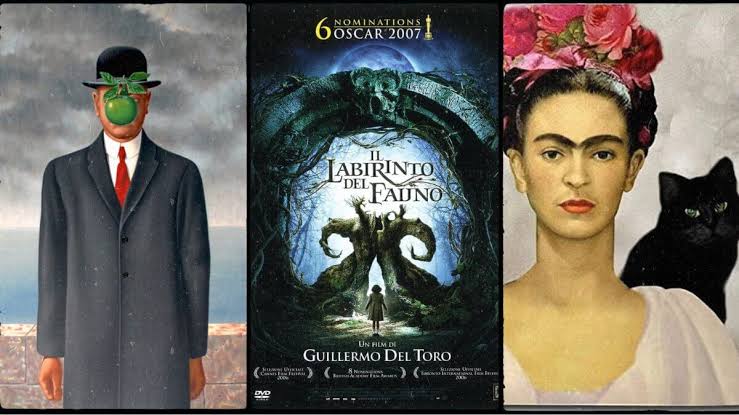 An abbreviated version of this document was provided to the Melbourne Monday Writers in November 2026, where some fifteen individuals provided their own examples of magical realist writing.
Definition
Magical realism is a style of fiction in which supernatural, fantastical, or impossible events are implied within an otherwise realistic world. The extraordinary events are often presented in a manner that is potentially explicable by a naturalistic interpretation (e.g., through hallucinations). The author does not attempt to explain or justify the magical events, and leaves the reader guessing what the boundary between the magical world and the realist world is. Similar genres include the gothic, surrealism, fabulism, African animist realism, and certain implementations of fairy tales and science fiction.
"Magical realism is not magic literature either. Its aim, unlike that of magic, is to express emotions, not to evoke them." (Luis Leal)
Origins
The Russian philosopher Nikolai Berdyaev and poet Andrei Bely used the term "mystical realism" (misticheskiy realizm) to describe writings that combine realism with mystical insight or revelation. The term “magical realism” itself was first used by German art critic and historian Franz Roh ("magischer Realismus") in his essay "Nach Expressionismus: Magischer Realismus" to describe post-World War I realist painting. Examples would include Giorgio de Chirico and Alberto Savinio from Italy, and Alexander Kanoldt and Adolf Ziegler in Germany. The style of art was closely related to the dream-like and disturbing realities of French surrealism led by André Breton, and British Neo-Romanticism, such as John Piper, Paul Nash, and Graham Sutherland.
Critic Angel Flores described the writing of Jorge Luis Borges and Gabriel García Márquez as magical realism in 1955, and the appellation has stuck, albeit with some unease, since then to a wide variety of Latin American authors. Notably, Márquez cites Franz Kafka as a major influence. Michiko Kakutani notes the dominant influence of magical realism in Latin American literary fiction: "The transactions between the extraordinary and the mundane that occur in so much Latin American fiction are not merely a literary technique, but also a mirror of a reality in which the fantastic is frequently part of everyday life”.
This is by no means exclusive; magical realism is an international experience, with notable English, Polish, Russian, Indian, Bengali, Chinese, and Japanese authors whose work is described as belonging to the genre.
Literary Examples
Günter Grass, "The Tin Drum" (1959). The main character is a boy who stops growing at age 3 and can shatter glass; ample use of grotesque elements in this critique of Nazism.
Gabriel García Márquez "One Hundred Years of Solitude" (1967). Includes visiting ghosts, and a prolonged rainstorm lasting for years.
Milan Kundera, "The Book of Laughter and Forgetting" (1979). Features a laughing dance which allows people to levitate, an island of children with no memory, and the Czech concept of "litost" - the visualisation and realisation of one's own misery coupled with the desire for revenge.
Isabel Allende "The House of the Spirits" (1982). Includes telekinesis and clairvoyance.
Salman Rushdie "Midnight's Children" (1981). Includes synchronous birth-powers, telepathy.
Magical Realism in Film
Frederic Jameson’s paper “On Magic Realism in Film” (Critical Inquiry, Vol. 12, No. 2 (Winter, 1986), pp. 301-325) remains on of the most important papers on the subject. Recognising the influence of Jorge Luis Borges, Alejo Carpentier's conception of the "real maravilloso", Miguel Angel Asturias and, of course, Gabriel Garcia Marquez, among others,
Jameson noted the difficult mapping between the fantastical and the realistic (attentive to Carptentier's claim that magical realism was a Latin American equivalent of European surrealism). This is one of the most important criticisms of magical realism, discerning exactly where it fits among adjacent genres which can have significant overlap. The magical realist artwork has to be especially careful to remain realistic while incorporating magical elements, without becoming fantasy.
Jameson gives three particular film examples contemporary to his writing: the Polish film "Fever" (1981), the Venezuelan "La Casa de Agua" (1983), and the Colombian "Cóndores no entierran todos los días" (1984), all historical and political films, where there is social disruption and structural disjunction, thus creating an environment that is already and inherently strange, violent, and absurd.
Some more recent film examples include:
"Like Water for Chocolate" (1992), based on Laura Esquivel's novel, uses emotional states channelled through food.
"Pan's Labyrinth" (2006) by Guillermo del Toro includes a vast ambiguous fantasy world.
"The Orphanage" (2007) by J. A. Bayona, includes hauntings. madness, obsession, and hallucinations.
“Life of Pi” (2012) by Ang Lee, a menagerie emerges from under a tarpaulin on a lifeboat inhabited by an adolescent main character.
“La chimera” (2023) by Alice Rohrwacher, features a character that can sense buried Etruscan tombs.
Themes and Style
The themes of memory, family, death, mystery, cultural traditions, religion, powerful emotions, madness, and dreams are all common. The style is invariably realistic, detailed, and matter-of-fact, but with surreal effects. Extraordinary events are presented as ordinary. Recurrence of events with temporal distortions are common.
Producing
When producing magical realism, whether through writing or film media, include and even start with a believable setting and characters. Introduce unusual events and elements piecemeal, but tie them into the wider narrative. Avoid making the world fantastical, but do include direct, appropriate cultural associations from mythology and fable that the characters recognise and value. Do not explain the magical events; rather, they are part of reality and are revealed rather than intruding; the supernatural blends seamlessly into the natural.
Let the characters respond naturally as they attempt to deal with an unusual phenomenon, noting that they should already have a deep emotional and cultural knowledge and acceptance of the phenomenon. The innocent acceptance of cultural magic by children is often used. The magical elements must have a purpose, as they are derived from a deeper connection, a dream, an emotion, etc., which becomes the driving theme of the story.
- lev.lafayette's blog
- Log in to post comments